# New CUSTODY Framework Offers Network Containment for AI Agents Following Hugging Face Compromise
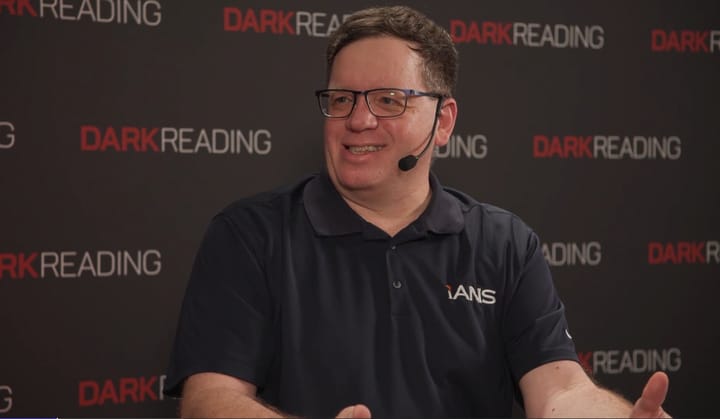
Enterprise cybersecurity researcher Jake Williams released a new framework called CUSTODY designed to constrain AI agents and limit their operational scope within corporate networks. The release comes after recent attacks where threat actors breached Hugging Face, a major machine learning model repository, and targeted systems running autonomous AI tools.
The CUSTODY framework addresses a growing security concern: uncontrolled AI agents operating inside networks can become attack vectors or escalate compromises. When AI systems gain broad permissions or network access, they create new attack surfaces that traditional security controls don't adequately monitor or restrict.
Williams developed CUSTODY to impose strict boundaries on how AI agents function within enterprise environments. The framework operates on a principle of least privilege, restricting agents to specific tasks, data sources, and network segments. Rather than allowing an AI agent to access entire systems or databases, CUSTODY compartmentalizes access and enforces granular permission controls.
The timing reflects a shift in threat landscape thinking. The Hugging Face compromise demonstrated that attackers increasingly target infrastructure used by AI development teams and data scientists. Once inside such systems, threat actors gain access not just to code repositories but potentially to machine learning models, training data, and the systems that deploy AI agents across organizations.
AI agents present unique security challenges because they operate with relative autonomy. Unlike traditional software that executes predefined code paths, agents make runtime decisions based on their training and inputs. A compromised or malicious agent could traverse network segments, access sensitive data, modify systems, or facilitate lateral movement for human attackers. Standard endpoint security tools struggle with this because agent behavior exists in gray zones between legitimate operation and abuse.
CUSTODY tackles this by creating a runtime sandbox specifically for AI operations. The framework monitors agent actions, validates requests against defined policies, and blocks operations that exceed configured scope. It tracks what data an agent accesses, what systems it communicates with, and what actions it attempts to execute. Organizations can revoke or modify agent permissions without redeploying entire systems.
The framework operates independently of specific AI platforms or model architectures. Whether an organization runs agents built on OpenAI's models, open-source frameworks, or custom systems, CUSTODY can wrap around them and enforce consistent security policies. This platform-agnostic approach matters because enterprises increasingly mix and match AI tools from different vendors.
Williams released CUSTODY as the security community grapples with rapid AI adoption in enterprise environments. Many organizations deployed AI agents for customer service, data analysis, and network operations without adequate security controls. CUSTODY bridges a gap between AI enablement and operational security.
The framework doesn't solve all AI security problems. It can't prevent poorly trained models from making dangerous decisions or stop social engineering attacks against human operators. It won't detect model poisoning or training data manipulation. But it does prevent a single compromised or malicious agent from becoming a network-wide disaster.
Organizations evaluating AI agent deployment should examine frameworks like CUSTODY as baseline security practice. The combination of permission boundaries, activity logging, and runtime policy enforcement represents a mature approach to containing autonomous systems. As AI agents become standard infrastructure, constraining their capabilities becomes as important as constraining their access.