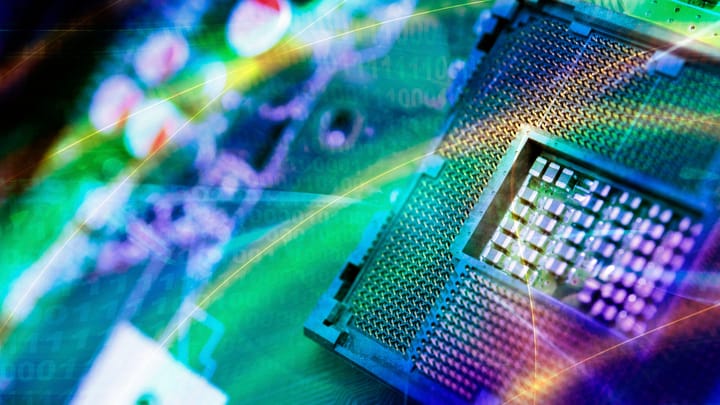
Hardware manufacturers are racing to implement post-quantum cryptography standards before quantum computers become powerful enough to break current encryption methods. This shift represents one of the cybersecurity industry's most fundamental transformations in decades, driven by the concrete threat that quantum computers will render today's cryptographic algorithms obsolete.
The National Institute of Standards and Technology finalized its post-quantum cryptography standards in August 2024, providing hardware vendors with approved algorithms to integrate into their products. These new standards replace widely used methods like RSA and elliptic curve cryptography, which rely on mathematical problems that classical computers struggle to solve but quantum computers could crack in hours or days.
Hardware manufacturers face pressure to embed post-quantum resistant algorithms into processors, firmware, and communication interfaces before quantum computing reaches the threshold known as "Q-day." Companies including Intel, AMD, and ARM have begun integrating these standards into next-generation chip designs. Cryptographic agility, the ability to switch between encryption methods, has become a baseline requirement rather than a luxury feature.
The timeline matters. Security researchers estimate that adversaries are actively collecting encrypted data now, betting that quantum computers will eventually allow them to decrypt this harvested information. This "harvest now, decrypt later" threat means organizations storing sensitive data for 10, 20, or 30 years must assume current encryption will eventually fail. Financial institutions, government agencies, and healthcare providers face particular pressure to migrate because their data retention policies span decades.
Migration presents practical challenges. Organizations cannot simply swap out cryptographic algorithms without rigorous testing. New post-quantum algorithms behave differently than current standards, requiring different key sizes, processing power, and memory footprints. Larger key sizes mean bigger data payloads and potentially slower performance. Hardware that worked perfectly with RSA encryption may require redesign to accommodate lattice-based or hash-based alternatives.
The industry has identified several post-quantum algorithms as standards. ML-KEM (Module-Lattice-Based Key-Encapsulation Mechanism) handles key establishment. ML-DSA (Module-Lattice-Based Digital Signature Algorithm) and SLH-DSA (Stateless Hash-Based Digital Signature Algorithm) provide digital signatures. FIPS 203, FIPS 204, and FIPS 205 formally codified these standards, giving vendors clear targets for implementation.
Backward compatibility creates additional complexity. Hybrid approaches, combining post-quantum algorithms with classical cryptography temporarily, allow systems to operate during transition periods. Hardware vendors are designing chips that support both old and new standards, enabling gradual deployment without forcing simultaneous migration across entire infrastructure.
Enterprise hardware roadmaps now include post-quantum capabilities as mandatory features rather than optional enhancements. Network switches, routers, encryption accelerators, and cloud infrastructure hardware are being redesigned. Software vendors must adapt operating systems, libraries, and applications to support the new algorithms.
The race against quantum computing advancement involves uncertainty about timing. Some researchers predict large-scale quantum computers capable of breaking current encryption remain 10 to 15 years away. Others suggest the timeline could compress. This uncertainty, combined with the massive scale of global infrastructure requiring updates, explains why hardware vendors have begun integration now rather than waiting for quantum computers to actually arrive.
Organizations should begin inventorying systems using asymmetric cryptography and prioritize migration plans based on data sensitivity and storage duration.